
Ground the name in an incident
Use one completed event, its subject and the established facts. Let a memorable detail, the first speaker’s relationship and the chosen tone shape incident-linked candidates.
NPC & social
One completed incident.
A believable first speaker.
A name worth remembering.

A name with campaign history
Start with the true event and the person who first says the name.
Use one completed event, its subject and the established facts. Let a memorable detail, the first speaker’s relationship and the chosen tone shape incident-linked candidates.
Frame first use, explain why the community remembers the name and add variations. Explore adoption, resistance and bounded spread while leaving reputation and later events for your table.

The memorable detail
Companions gather beside a fallen, cracked bell and a damaged tower. One points at the knight’s soot-marked helmet while witnesses look on.
Describe the completed incident, subject, established facts and first speaker. Choose the literal detail behind the name and the relationship that gives it meaning.
What you can create
Keep the origin grounded as you explore where the name might go.
Describe what happened, the person or party involved and the facts that must remain true. Give the nickname an incident anchor.
Name the person who first gives the nickname. Their relationship to the subject helps shape why they choose that particular detail.
Create candidates around a memorable detail from the completed event. Set the tone and nickname form for the originating community.
Choose a nickname and connect it to its incident anchor. Keep the established source facts distinct from the name you edit.
Shape the moment the name is first spoken. Give the speaker, subject and community a clear place in its origin.
Explain what makes the nickname easy for this community to remember. Tie its appeal to the event and the people who know it.
Add natural forms of the name and people who already use it. Keep variations connected to the same completed incident.
Explore who might adopt the name, who might resist it and where it could spread. Leave actual use and later events for your table.
Save origins to your signed-in account. Reopen, rename, duplicate, search, tag, annotate or delete records, with version history separating established facts from the editable nickname.
Copy full Dungeon Master material or a player-facing origin, download the structured record or print the result for your table.
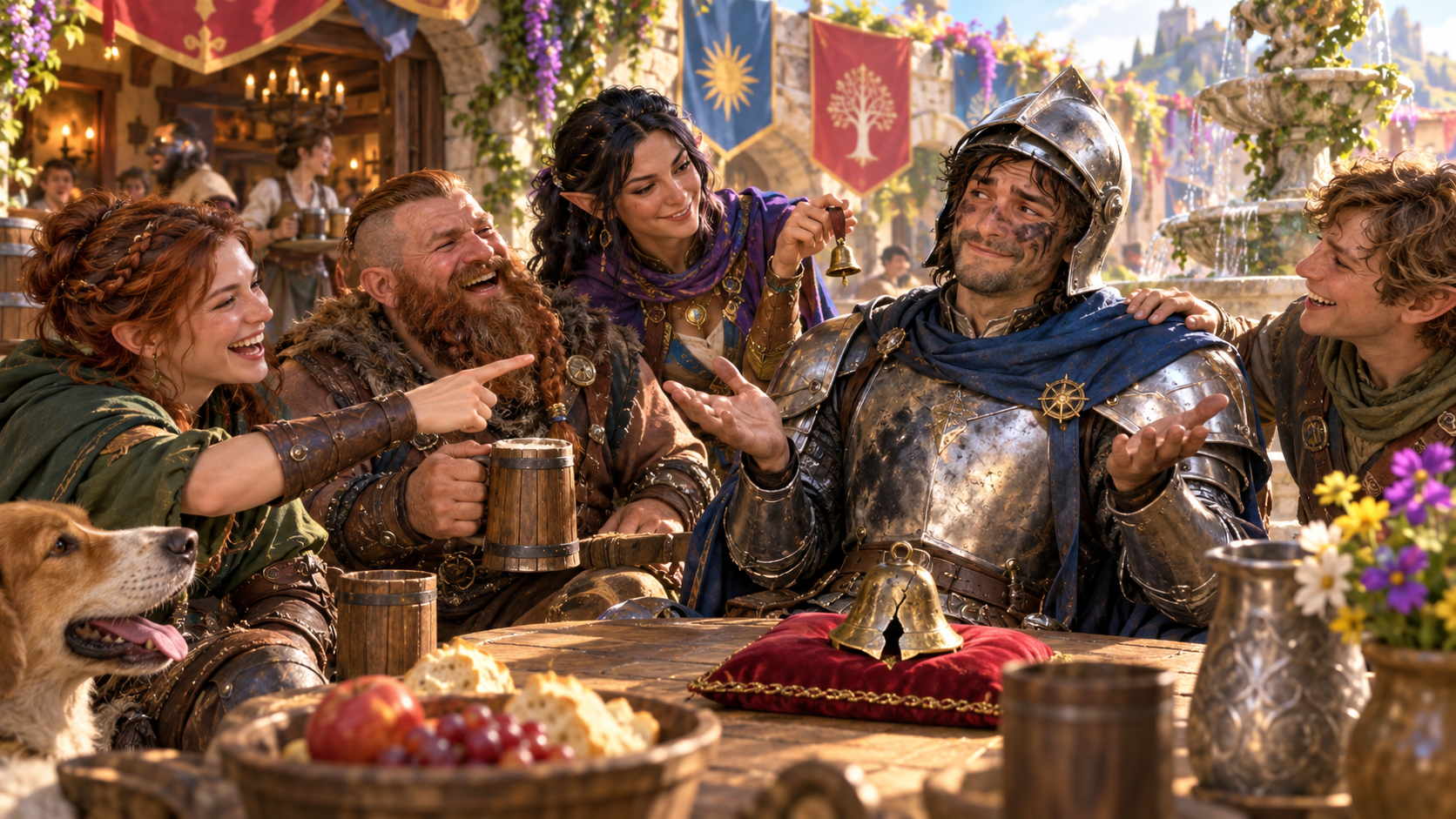
Give the name its first use
At a tavern table, companions share bells and a joke with the armoured knight. The moment connects a memorable incident to a name people can repeat.
Choose the nickname, frame the moment it is first spoken and explain why this community remembers it. Add plausible variations, current users and possible adoption or resistance.
Quick or detailed preparation
Use relationships and community detail to make the origin feel earned.
Enter the completed event, the person or party involved and established facts. Identify the first speaker and choose tone, nickname form and spread potential.
Describe how the first speaker knows the subject and where the name originates. Add the literal memorable detail, protected terms and private Dungeon Master context.
Select the strongest candidate and review the incident anchor, first-use moment and reason it sticks. Edit the nickname while keeping the completed event intact.
Add variations, people already using the name, possible adoption and resistance, and future-use ideas. Decide during play which possibilities become part of the campaign.

Keep the origin and possibilities together
A knight and archivist review a bell-rescue illustration, bell-symbol variations, archive records and a map. The records keep the event beside ideas for the name’s possible spread.
Keep the source incident, established facts, selected name and variations together. Use the bounded spread and future-use ideas as preparation while your table decides what happens next.
Keep and share the origin
Save versions and choose the material your table needs.
Save nickname origins to your signed-in account. Reopen, rename, duplicate, search, tag, annotate or delete records when you need to revisit them.
Version history keeps the completed incident and established facts separate from the nickname you edit. Review the origin as you prepare further variations.
Copy the full Dungeon Master version or a player-facing nickname origin. Choose the material you want your table to read before sharing.
Download the structured record or print the result. Keep the first speaker, first-use moment, reason it sticks and possible spread beside your campaign notes.
Your workspace and related products
Open VISINVOKE products through your account.

Open Nickname Origin in the Generators collection of your signed-in desktop workspace. Prepare, review, edit, save and export the origin from the same product home.
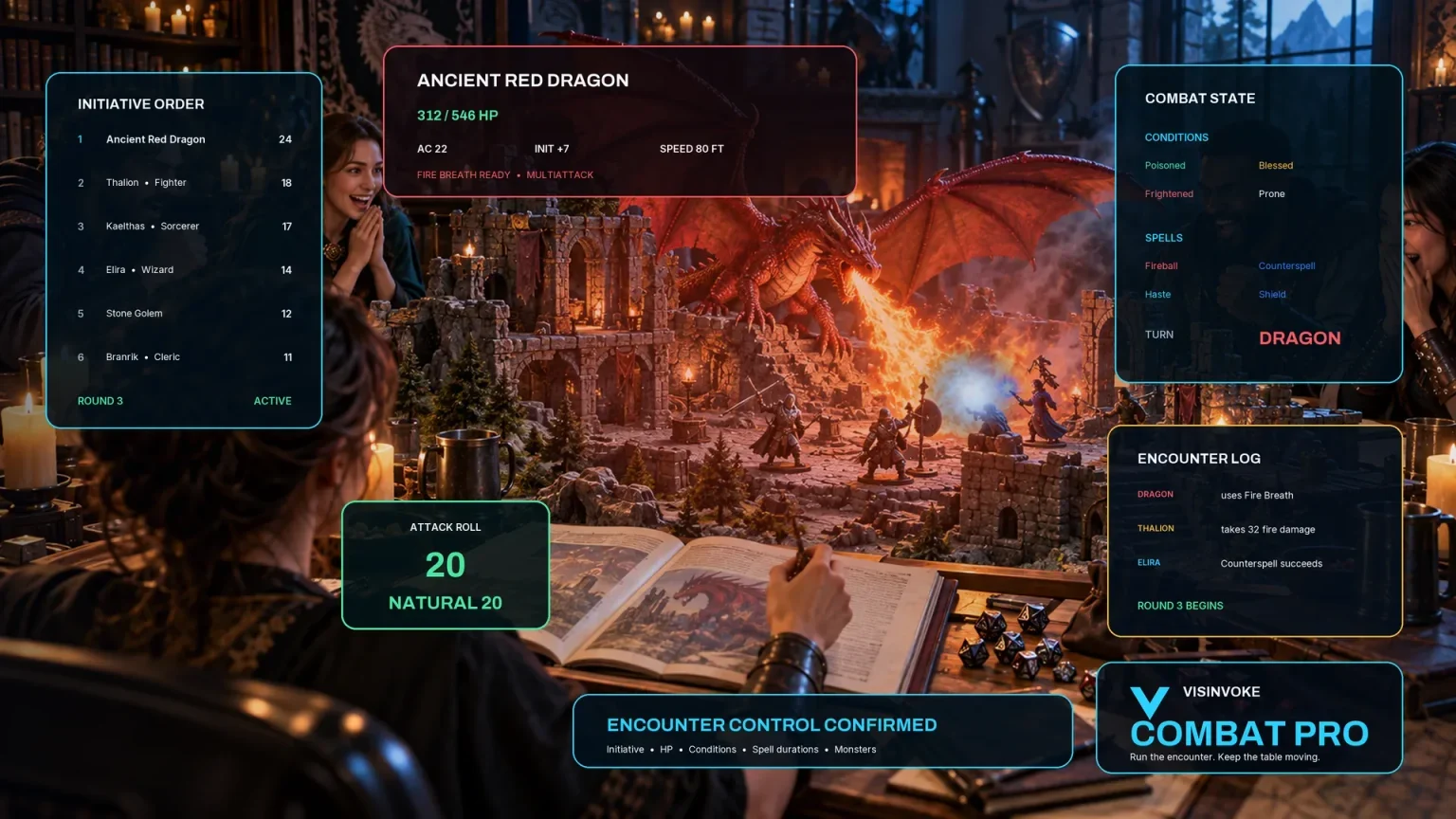
Use the separate encounter workspace when preparing combat for your table. Nickname Origin keeps its incident, speaker and possible name adoption as social preparation and sends no result to Combat PRO.
Images are product illustrations. The origin preserves the completed incident while later use remains a choice in play.
Questions and answers
Source facts, first use, possible spread, account records and sharing at a glance.
One nickname grounded in a completed incident: candidates, a selected name and incident anchor, first speaker and relationship, first-use moment, why it sticks, variations, current users, possible spread, adoption and resistance, and player-facing origin with private continuity.
Describe the completed incident, subject, established facts and first speaker. Choose the tone, nickname form and how far the name might spread, then generate and review the origin.
Add the first speaker’s relationship to the subject, the originating community, the literal incident detail behind the name, protected terms and private Dungeon Master context. Use those details to shape the origin.
The result offers possible adoption, resistance and future-use ideas. It does not change reputation standings, force universal adoption, simulate a crowd or stage a later callback. Your table decides which possibilities occur.
Save to your signed-in account and reopen, rename, duplicate, search, tag, annotate or delete records. Version history keeps the completed incident and facts separate from the editable nickname. Copy Dungeon Master or player-facing material, download the structured record or print.
Create a free VISINVOKE account or sign in, get Desktop Control Centre through your account installer page and open Nickname Origin in its Generators collection. View current subscription details in your account.
Continue in VISINVOKE
Create a free VISINVOKE account or sign in to your existing account. Get Desktop Control Centre through your account installer page.
Open Nickname Origin in the Generators collection. View current subscription details in your account.